
FREC begins 2026 with the Tatuus T 326 and a 30-car grid
The FIA Formula Regional European Championship replaces FRECA in 2026, bringing the second-generation Tatuus T 326 to an eight-round season with 30 cars.
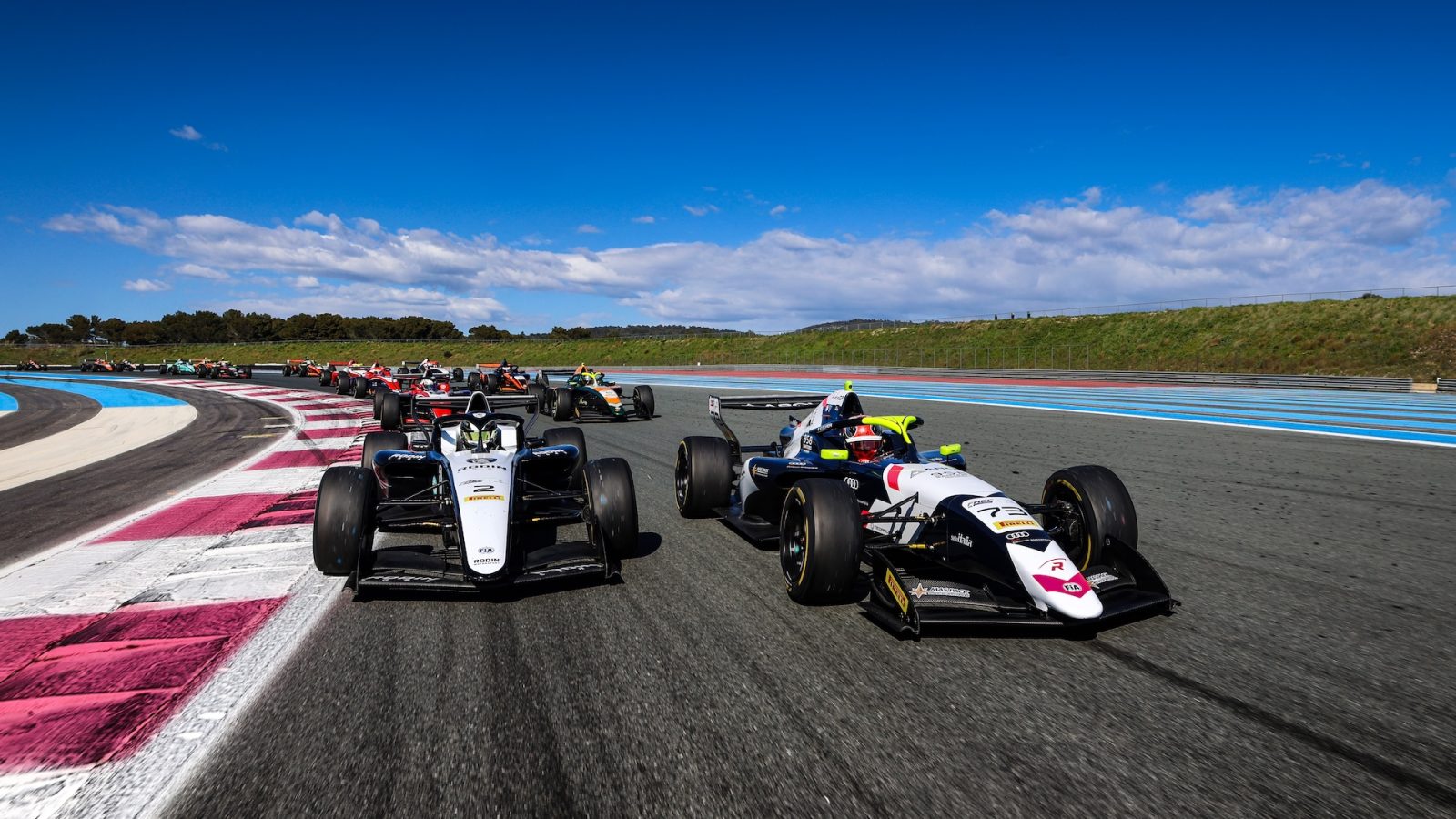
The FIA Formula Regional European Championship (FREC) begins in 2026 as the successor to the Formula Regional European Championship by Alpine (FRECA). The championship has the FIA’s full support and is organised and promoted by the Automobile Club d’Italia (ACI), an FIA member club, according to the official championship information.
The most visible sporting change is the introduction of the second-generation Formula Regional Tatuus T 326. Tatuus developed the car with the FIA, applying an aerodynamic philosophy used in Formula 1 to encourage closer racing. That is the intended direction of the design, not a confirmed competitive outcome: the championship information does not provide results showing how much closer the racing will be.
Eight European rounds from April to September
FREC remains one level above Formula 4 in the FIA single-seater pyramid. Five of its eight 2026 circuits also host a round of the Formula 1 world championship, giving the series a calendar built around recognisable European venues without making it a Formula 1 support championship.
- Red Bull Ring, Austria: April 24–26
- Circuit Zandvoort, Netherlands: May 22–24
- Spa-Francorchamps, Belgium: May 29–31
- Monza, Italy: June 19–21
- Hungaroring, Hungary: July 3–5
- Circuit Paul Ricard, France: July 17–19
- Imola, Italy: September 4–6
- Hockenheim-Ring, Germany: September 11–13
Pre-season testing was held at Hockenheim-Ring, Circuit Paul Ricard and the Red Bull Ring. Every team will use Pirelli tyres, and the championship will run over eight weekends between April and September.
Ten teams make up a 30-car field
Ten teams have entered the 2026 championship, with three drivers per team. The resulting 30-car grid consists of ART Grand Prix, CL Motorsport, G4 Racing, MP Motorsport, Prema Racing, R-Ace GP, Rodin Motorsport, RPM Motorsport, Trident Motorsport and Van Amersfoort Racing.
Each event features one free-practice session, two qualifying sessions and either two or three races. Qualifying lasts 30 minutes per session, divided into two groups that receive 15 minutes of track time each. A draw determines which group runs first. At the opening round, the groups are formed from odd and even free-practice numbers; at later events, championship positions determine the split. The running order is reversed between the two qualifying sessions.
At two-race events, qualifying 1 sets the Race 1 grid and qualifying 2 sets the Race 2 grid. Three-race events add a reverse-grid Race 2 for the 12 fastest drivers from qualifying 1, while qualifying 2 determines the Race 3 grid. The fastest driver across the two groups takes pole, followed by the fastest driver from the other group and then the second-fastest driver from the pole-setting group. When times are equal, the earlier time receives priority.
The standard scoring system awards 25 points to the winner and points down to one point for 10th place. Pole position is worth two points and the fastest lap one point. The reverse-grid race uses a separate 10-to-one scale for the top 10, with an additional point for fastest lap. FIA Driver, Team and Rookie titles will be awarded.
For drivers moving up from Formula 4, the 2026 change is clear: a new FIA-backed championship, a new Tatuus generation and a defined position in the single-seater ladder. The T 326 is designed to support closer racing, but whether it delivers that effect is a sporting question that will only be answered by competition results.