
[Guide] Sabalenka vs. Rybakina: How to follow the US Open final on September 12
The 2026 US Open final pits Sabalenka’s hard-court approach against Rybakina’s comeback form, with a third straight title and a separate No. 1 ranking milestone at stake.
Level: Informed · Reviewed 12 Sep 2026
Aryna Sabalenka’s 2026 US Open final against Elena Rybakina is scheduled for September 12 at 4 p.m. ET. Sabalenka is trying to extend her championship run, while Rybakina is contesting her first final at the tournament. The most useful way to follow the match is to track how each player responds when the pressure changes.
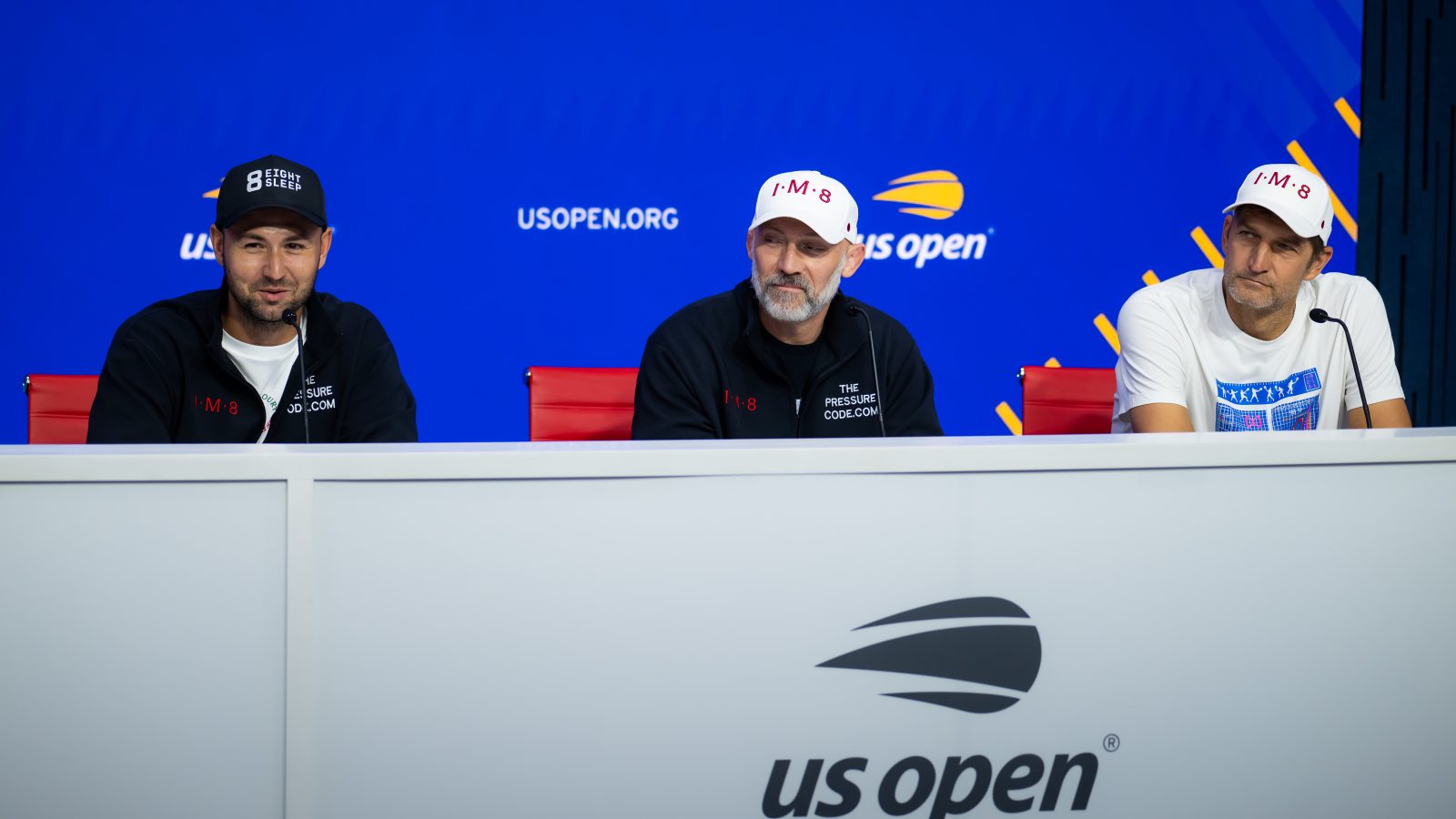
The WTA’s September 11 report also brings Sabalenka’s coaching structure into focus. Jason Stacy is her high-performance coach, Anton Dubrov has been her full-time coach since 2020, and Max Mirnyi serves as her tactical consultant. Their comments identify the patterns Sabalenka’s team wants to see, but they do not predict the result.
Two players, different stakes
Sabalenka reached her fourth consecutive US Open final by beating Jessica Pegula 7-5, 6-2. A victory would give her three straight US Open titles, after reaching the final at the tournament for four years in succession. The immediate question is whether she can complete another championship run in New York.
For Sabalenka, the streak would turn another final appearance into a third consecutive title and reinforce her position in the event. Rybakina’s scheduled rise to No. 1 gives her a different competitive milestone beyond the trophy: she is already due to become world No. 1 when the updated rankings are published on September 14.
Rybakina earned her place in the final by recovering from a set down to beat Coco Gauff 3-6, 6-4, 6-4. It is her first US Open final, and she arrives as the other half of a final between the top two seeds in New York.
The ranking consequence is separate from the championship. The WTA has announced that Rybakina will become world No. 1 on September 14; the final itself decides the US Open champion.
Start with Sabalenka’s preferred rhythm
Stacy describes Sabalenka’s effective strategy as setting the rhythm herself rather than adjusting her level to an opponent’s performance. Early in the match, watch whether Sabalenka imposes the intensity of the exchanges or allows Rybakina’s level to shape them.
One spectacular point will not answer that question. A more useful signal is a repeated pattern across several games: who is forcing the other player to react, and whether that pressure survives after a change in the score or a difficult exchange.
Watch the next point after the difficult one
Stacy identifies Sabalenka’s ability to stay calm, refocus and play the next point with intensity as a major part of her recent success. When she misses an opportunity or loses a demanding point, follow what happens immediately afterward rather than treating the mistake as a turning point by itself.
A reset does not guarantee that Sabalenka will win the next point. It can, however, show whether the process described by her coach remains visible when the score becomes uncomfortable. If one difficult moment continues to affect the points that follow, that is a different match pattern from an isolated error followed by a clear return to her intended approach.
Look for changes when Plan A stops working
Dubrov says hard courts suit Sabalenka’s overall game particularly well and that she now understands her Plan A, Plan B and Plan C more clearly on that surface. The practical question is not whether a different plan exists in theory, but whether Sabalenka can move to another option when her first approach stops producing the same pressure.
Track any adjustment more than once before drawing a conclusion. A tactical change becomes meaningful when it corresponds to a changing pattern or condition in the match and does not cost Sabalenka the intensity her team considers central to her game.
That distinction matters because a player can lose a point while making the right decision, just as a successful shot does not by itself prove that an adjustment worked. The stronger signal is a repeated change that alters the shape of the following exchanges.
Use the rivalry as context, not a forecast
This is scheduled to be the 18th meeting between Sabalenka and Rybakina on the WTA Tour, with Sabalenka leading the series 10-7. That record shows how familiar the matchup has become, but it cannot establish who will control this final. It is useful context for the opening exchanges, not a substitute for what happens on court.
The match is also set to be their third Grand Slam final. Sabalenka won the 2023 Australian Open, while Rybakina won the 2026 Australian Open in their two previous major-final appearances. Those results add championship context, but neither creates a ready-made answer for New York.
For the full pre-match record, the WTA final preview sets out the players’ routes to the final, while the coaches’ breakdown explains the themes on Sabalenka’s side. The routes establish what happened; the coaching comments describe the approach Sabalenka’s team wants to see.
A practical order for following the final
Before the match, fix the stakes in mind: Sabalenka is defending her US Open run, Rybakina is playing her first final at the event, and Rybakina’s move to No. 1 is due with the rankings update on September 14. That keeps the trophy and the ranking milestone separate as the match unfolds.
Once play begins, start with the pace. Check whether Sabalenka tries to dictate as Stacy describes, and whether Rybakina prevents that rhythm from becoming established. When momentum shifts, return to Sabalenka’s response on the next point: does she remain composed and bring intensity, or does the difficult moment continue to shape the points that follow?
As the match develops, look for repeated changes in approach. Dubrov’s Plan A, B and C reference matters only if an adjustment appears more than once and corresponds to a changing pattern or condition. Afterward, measure the result against the actual stakes: whether Sabalenka secured a third consecutive US Open title, and how the final changed the rivalry’s 10-7 record.
The final can be read most clearly through those specific questions. Sabalenka’s rhythm, reset and adaptation provide the match-watching framework; Rybakina’s ability to disrupt that sequence will determine how far the familiar plan carries on this occasion.